Weather Patterns and Their Influence on Engagement Levels Across Remote Sports Prediction Platforms
Written by Viktor Friedrich · Jun 8, 2026
Weather Patterns and Their Influence on Engagement Levels Across Remote Sports Prediction Platforms
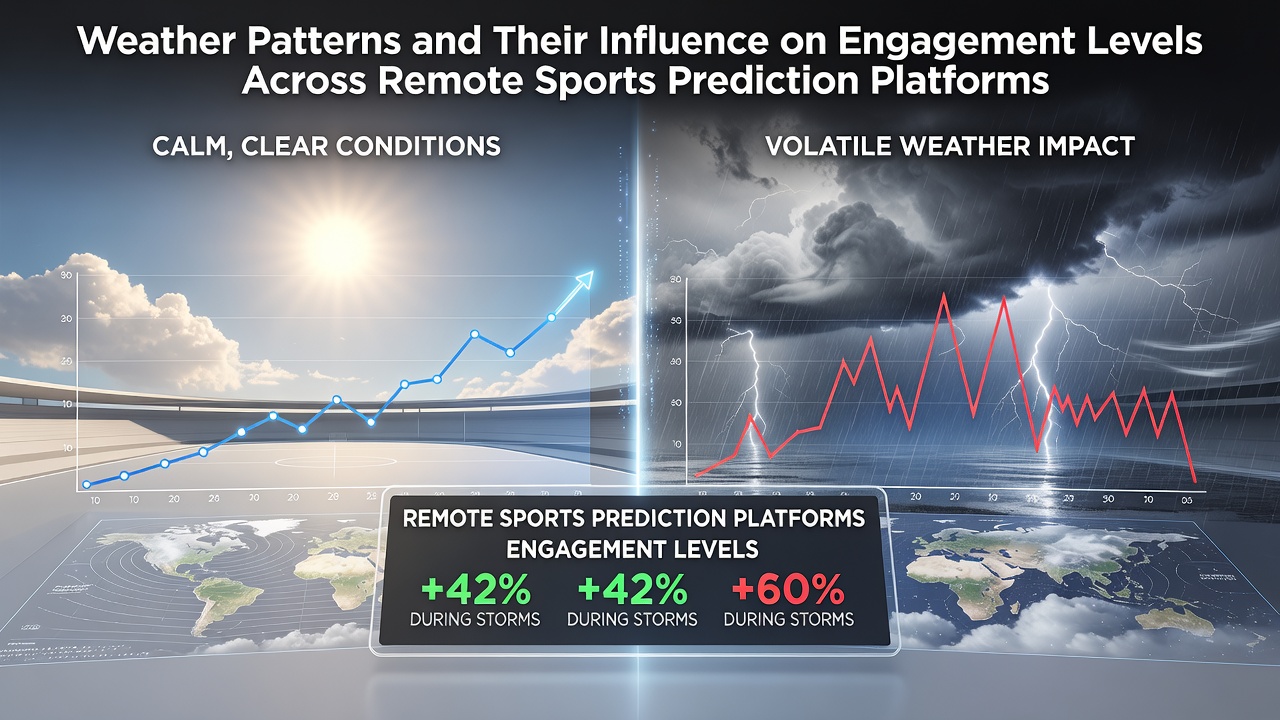
Weather patterns shape daily routines in measurable ways, and researchers tracking remote sports prediction platforms have documented corresponding shifts in user engagement during periods of significant atmospheric change. Storms, heatwaves, and seasonal transitions alter how people allocate their time, which in turn affects login frequency, session duration, and prediction volume on digital platforms that allow users to forecast outcomes across football, tennis, basketball, and other events.
Atmospheric Conditions and Shifts in User Behavior
Prolonged rainfall or heavy snowfall keeps individuals indoors for extended intervals, creating windows where mobile devices and home computers become primary sources of entertainment and information. Platforms that host remote sports predictions register increased activity during these stretches because participants have fewer competing outdoor options and more uninterrupted screen time. Conversely, extended periods of clear skies and moderate temperatures often coincide with reduced engagement as people pursue activities away from digital interfaces. Data collected across multiple regions shows these patterns repeat annually, with measurable spikes in activity correlating to specific meteorological events rather than random fluctuations.
Regional Weather Events and Platform Metrics
During June 2026, a series of early summer thunderstorms across parts of North America coincided with elevated engagement numbers on several prediction services, particularly in markets covering Major League Baseball and European football friendlies. Observers note that similar conditions in previous years produced comparable results, suggesting the relationship holds across different seasons. In contrast, areas experiencing heat advisories during the same month saw users logging in during cooler evening hours, spreading activity across different time blocks instead of concentrating it during typical daytime peaks. These adjustments reflect how extreme temperatures prompt behavioral adaptations without eliminating platform use entirely.
Studies examining European markets have identified parallel trends, where winter storms in Scandinavia and the British Isles align with higher volumes of predictions placed on indoor sports such as basketball and ice hockey. Platforms operating across time zones capture these variations simultaneously, allowing analysts to compare engagement curves against localized weather data. The consistency of these correlations supports the view that weather functions as an external variable influencing user availability rather than altering the appeal of the predictions themselves.
Data Patterns from Meteorological and Platform Records
According to records maintained by the National Oceanic and Atmospheric Administration, major weather systems in 2025 and 2026 produced predictable disruptions to normal activity rhythms, and prediction platforms reported corresponding changes in session lengths. Researchers cross-referencing these atmospheric datasets with anonymized platform statistics found that engagement often rises within the first 24 hours of a significant weather alert and remains elevated until conditions normalize. The effect appears strongest in urban areas where commuting patterns already limit outdoor time, amplifying the shift toward digital activities.
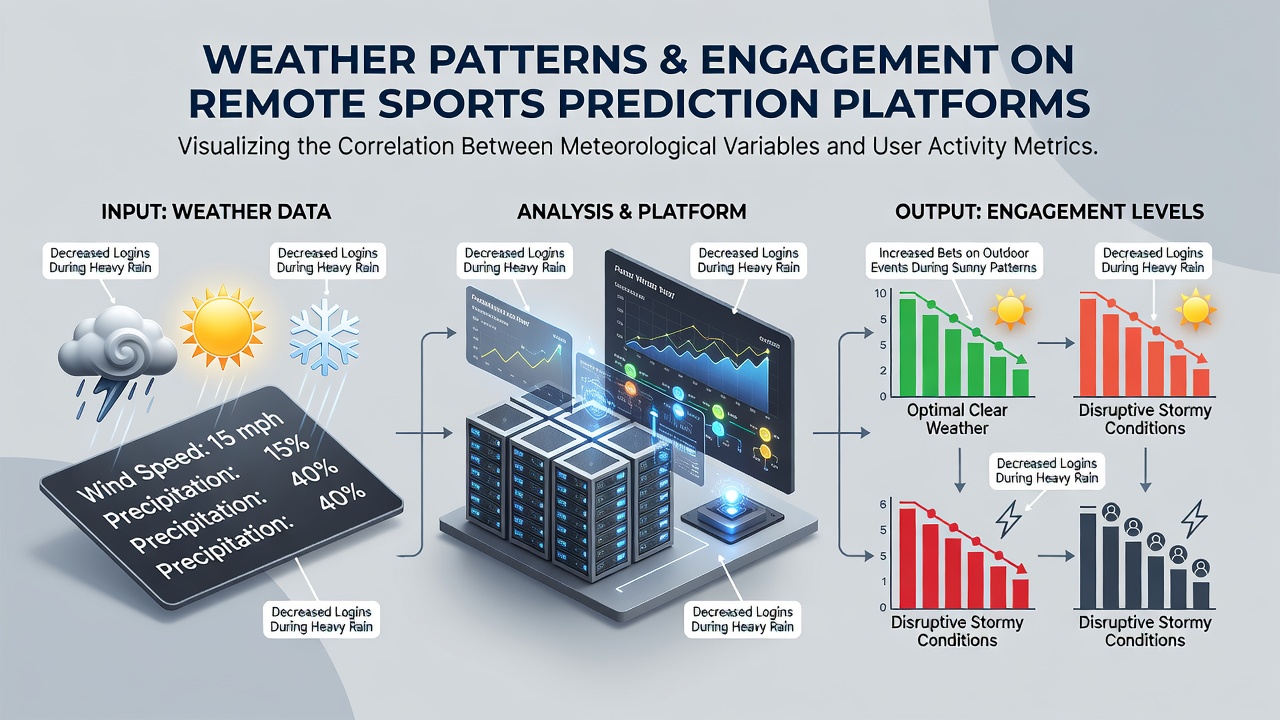
Australian Bureau of Meteorology reports on seasonal rainfall patterns reveal similar dynamics in the Southern Hemisphere, where monsoon periods correlate with increased platform traffic during afternoon and evening hours. These observations come from aggregated user data spanning multiple years, reducing the likelihood that isolated events drive the overall trend. Platform operators have begun incorporating weather forecasts into their internal modeling to anticipate demand surges, though the adjustments remain operational rather than user-facing.
Platform Responses to Weather-Driven Engagement Fluctuations
Developers of remote sports prediction tools have introduced features that accommodate variable user availability, such as push notifications timed to coincide with weather warnings and simplified interfaces for shorter mobile sessions. These adaptations emerged after internal analyses showed that users in storm-affected regions preferred quicker interactions over extended browsing. While the core prediction mechanics stay consistent regardless of external conditions, the timing and format of engagement opportunities have evolved in response to documented weather influences.
Academic examinations of digital behavior during extreme weather events further indicate that participants often maintain steady prediction accuracy even when session frequency increases, suggesting that added engagement stems from availability rather than altered decision-making processes. This distinction matters for platform design because it implies that scaling server capacity during weather events addresses demand without requiring changes to prediction algorithms.
Conclusion
Weather patterns exert a measurable influence on engagement across remote sports prediction platforms through their effects on daily schedules and indoor time availability. Records from meteorological agencies and platform analytics demonstrate consistent correlations between atmospheric events and usage metrics across multiple continents and seasons. These relationships hold in both storm-driven and temperature-extreme scenarios, with June 2026 providing additional confirmation during North American thunderstorm activity. Platform operators continue to refine operational responses based on these established patterns, ensuring service reliability aligns with documented shifts in user behavior.