Seasonal Player Migration Patterns Between Reel-Based Games and Live Sports Markets During Regional Incentive Rollouts on App Platforms
Written by Viktor Friedrich · Aug 19, 2026
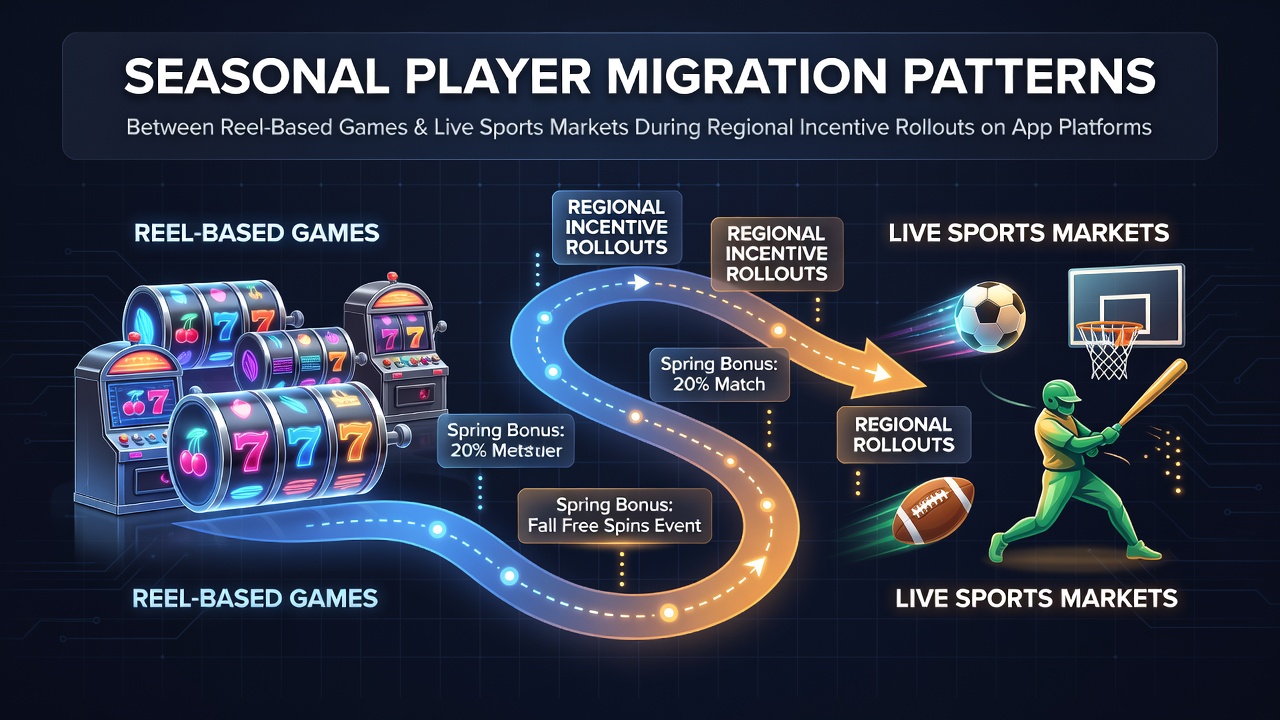
Seasonal Player Migration Patterns Between Reel-Based Games and Live Sports Markets During Regional Incentive Rollouts on App Platforms
Regional incentive rollouts on mobile platforms trigger measurable shifts in user activity between reel-based games and live sports markets, with patterns that align to calendar seasons and promotional calendars. Data from multiple jurisdictions indicates these movements occur when operators introduce time-limited bonuses tied to specific game categories, and the timing often coincides with major sporting events or off-peak periods in traditional slot engagement.
Understanding the Core Migration Dynamics
App-based platforms record user navigation data that reveals consistent transitions during August 2026 incentive windows across several North American and European markets. Reel-based games typically see initial spikes in participation when deposit-match offers activate, yet activity flows toward live sports markets once event-specific multipliers launch in the same promotional cycle. Researchers tracking these sequences note that the shift accelerates when basketball and football seasons overlap with summer bonus campaigns, creating parallel engagement opportunities on single user accounts.
Regional Variations in Incentive Timing
North American operators structure summer promotions differently from their counterparts in other regions, which influences how quickly users migrate between categories. In areas where state-regulated apps coordinate bonus releases with pre-season sports calendars, live event wagers capture a larger share of session time within the first ten days of rollout. Figures from regulatory filings show that Canadian provinces with centralized iGaming frameworks experience steadier cross-category movement compared to fragmented U.S. state systems, where staggered launch dates create staggered migration waves.
European markets demonstrate their own seasonal rhythm tied to soccer calendars and national holidays. When operators align reel-game cashback offers with early league matches, users frequently begin sessions on automated reels before redirecting to live sports dashboards once in-game betting lines open. This sequence appears in aggregated telemetry from multiple app providers operating across borders.
Data Patterns Across App Ecosystems
Analytics platforms that monitor session durations report that average time spent on reel-based titles drops by measurable percentages once live sports incentives activate in the same app environment. The transition proves more pronounced during periods when regional operators bundle cross-category rewards, such as free spins that convert into sports wager credits after a set number of reel spins. Observers tracking these mechanics note that the conversion feature encourages users to sample both categories within a single login period rather than maintaining separate engagement streams.
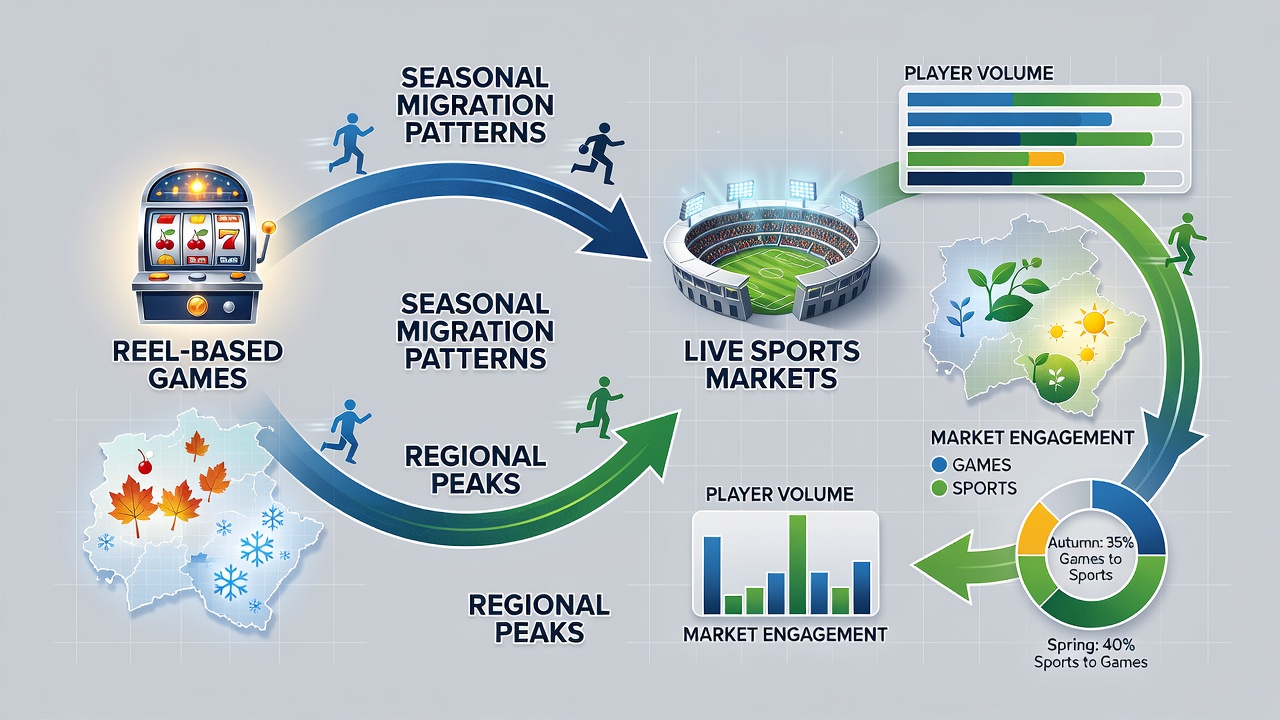
Studies conducted by academic research groups focused on digital gambling behavior have examined how interface design elements accelerate or slow these migrations. Simplified navigation between reel lobbies and live sports sections correlates with faster category switching, while deeper menu structures tend to retain users within one category for longer stretches. These design choices interact with the seasonal timing of incentive programs to shape overall platform traffic distribution.
Impact of Calendar Alignment on User Behavior
Live sports markets gain traction when major tournaments or league starts coincide with regional bonus periods, and reel-based engagement often recedes as users prioritize event-driven wagers. In August 2026, several platforms scheduled reel-focused reload bonuses ahead of international athletic competitions, which produced documented increases in cross-category account activity. The sequence typically begins with reel sessions during the initial bonus window and transitions once sports lines become available, creating a predictable two-phase pattern within the same promotional month.
Industry reports compiled by trade associations document similar cycles across multiple years, with the strongest migration signals appearing when incentives overlap with high-profile events rather than during quiet sporting periods. The consistency of these patterns allows operators to forecast resource allocation for server capacity and customer support staffing during rollout windows.
Platform-Level Observations and Measurement
App telemetry systems capture granular movement between game types by logging session starts, category switches, and incentive redemptions. These datasets reveal that users who begin with reel-based titles during early incentive phases frequently complete their sessions in live sports sections once those markets activate. The flow reverses in regions where sports betting restrictions lift later in the calendar year, pushing initial activity toward reels before sports options open.
Regulatory bodies in various jurisdictions require operators to submit aggregated activity reports that include category-level participation metrics. Analysis of these filings shows recurring seasonal spikes in cross-category movement that align with known promotional calendars rather than random user preference shifts. The data supports the view that incentive structure, not inherent game preference alone, drives the observed migrations.
Conclusion
Seasonal player migration between reel-based games and live sports markets follows identifiable patterns tied to regional incentive timing and sporting calendars on app platforms. The documented sequences appear consistently across jurisdictions when operators coordinate bonus releases with event schedules, producing measurable shifts in session allocation between categories. Continued collection of telemetry and regulatory data will clarify how these dynamics evolve as new promotional formats and platform features emerge in subsequent seasons.