Mapping User Navigation Patterns During Limited-Time Incentives for Electronic Poker Variants and Athletic Outcome Wagers on Portable Screens
Written by Wendy Wagner · Jun 10, 2026

Mapping User Navigation Patterns During Limited-Time Incentives for Electronic Poker Variants and Athletic Outcome Wagers on Portable Screens
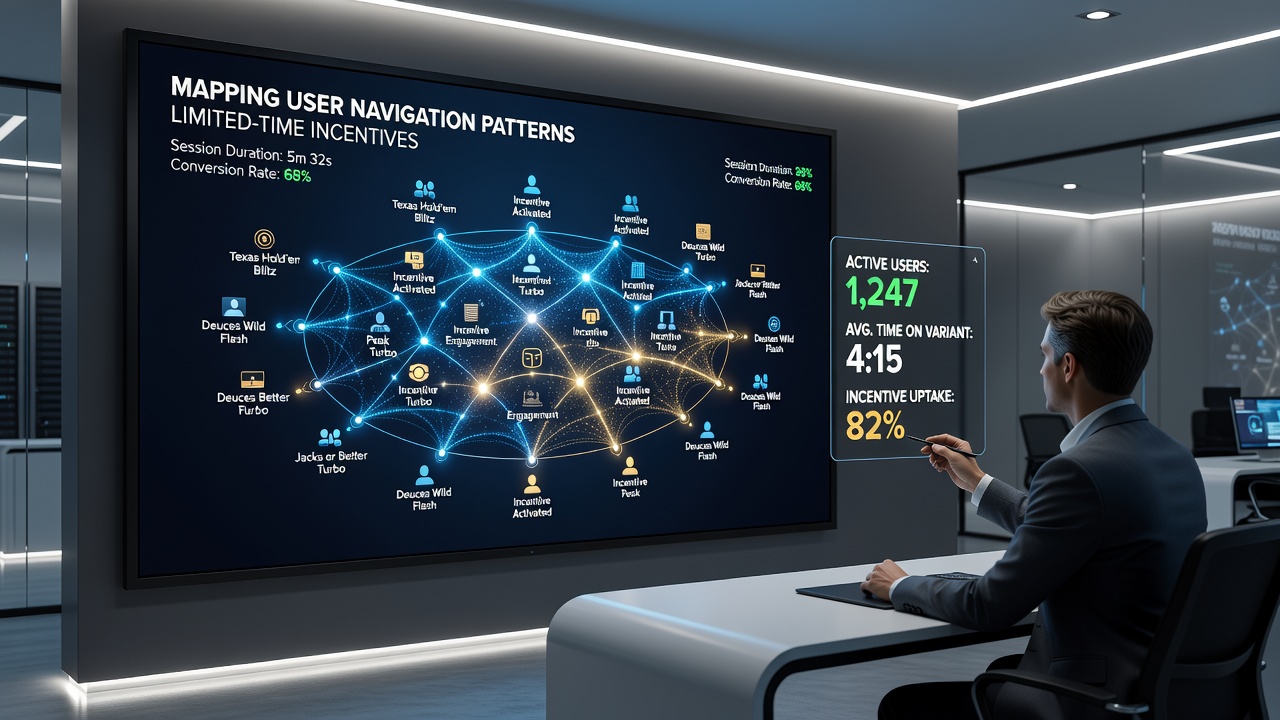
Analysts track how players move through mobile interfaces when limited-time incentives appear in electronic poker variants and athletic outcome wagers, and these patterns reveal consistent sequences that operators monitor through session logs and heat-mapping tools. Data collected across multiple platforms shows users often begin at the promotions banner before shifting to game selection menus, while timing of clicks and scrolls indicates heightened activity within the first 90 seconds of an offer appearing. Researchers at institutions focused on digital behavior have documented these flows using aggregated anonymized data sets that capture swipe gestures, menu expansions, and bet placement sequences without identifying individual accounts.
Core Elements of Limited-Time Incentive Structures
Limited-time incentives in mobile poker variants typically include deposit matches that expire within hours alongside free spin bundles tied to video poker hands, whereas athletic outcome wagers feature boosted odds on specific events that activate only during designated windows such as pre-match countdowns. Operators deploy these offers through push notifications that direct users straight into app dashboards, and navigation logs indicate most players respond by first verifying eligibility in account sections before proceeding to lobby views. Studies from regional gaming authorities demonstrate that such time-bound structures increase session starts by measurable percentages, yet they also concentrate user paths around checkout flows where bonus codes must be applied within tight parameters.
Techniques for Capturing Navigation Data on Portable Devices
Developers employ session recording frameworks that log coordinate taps and transition times between screens, allowing teams to reconstruct paths taken during incentive periods without storing personal identifiers. These systems integrate with backend analytics platforms that timestamp every interaction, from initial app launch triggered by a notification through to wager confirmation, and the resulting visualizations highlight bottlenecks where users pause or abandon sequences. Observers note that gesture analysis distinguishes between deliberate taps on poker variant icons and rapid scrolling through sports event lists, while heat overlays reveal concentration around time-sensitive countdown timers embedded in both game types.
Observed Patterns in Electronic Poker Navigation
Users engaging with electronic poker variants during limited incentives frequently follow a linear route that begins at the bonus claim screen then moves to variant selection grids before settling on specific paytable views, and data sets from June 2026 platform reports show elevated dwell times on multi-hand options when deposit bonuses apply. Navigation clusters form around autoplay toggles and hand history buttons immediately after incentive activation, suggesting players review prior sessions to gauge value, whereas exit patterns often route back through the promotions tab once bonus conditions are met. Those studying these flows across handheld devices report that portrait orientation dominates during poker sequences, with occasional landscape shifts occurring only when detailed rule pop-ups appear.
Patterns Emerging in Athletic Outcome Wager Flows
Athletic outcome wagers on portable screens during limited incentives produce more branched navigation trees, where users first access event calendars then filter by sport before expanding odds panels tied to boosted lines, and June 2026 figures from North American operators indicate rapid toggling between live and pre-match tabs when countdown timers near expiration. Path analysis reveals frequent returns to account balance displays mid-session to confirm bonus eligibility, while in-play wager additions create secondary loops that return users to the same event screens multiple times within a single promotion window. Aggregated reports highlight that push notification responses lead directly to deep links within sports sections rather than general lobbies, reducing overall screen transitions compared to poker flows yet increasing time spent on bet slip adjustments.
Comparative Insights Across Device Ecosystems
Cross-platform comparisons show iOS users exhibit slightly longer dwell periods on confirmation dialogs during incentive redemptions than Android counterparts, while both groups demonstrate similar clustering around search functions when locating niche poker variants or obscure athletic markets. External data compiled by the Nevada Gaming Control Board illustrates how regional regulatory reporting captures aggregate navigation metrics that inform responsible gaming tool placements, and similar approaches appear in Australian regulatory summaries that track incentive-driven engagement without overlapping jurisdictional methods. These parallel frameworks allow operators to align interface adjustments with observed user sequences across different portable operating systems.
Integration of Findings Into Interface Refinements
Design teams apply navigation mapping outputs to reposition incentive banners closer to primary game access points, and testing cycles confirm that reduced transition counts correlate with higher completion rates for both poker and sports wager offers. Session data collected in mid-2026 further indicates that dynamic timer placements within bet slips help maintain focus during athletic wagers, whereas poker interfaces benefit from persistent bonus progress indicators visible across variant switch menus. Industry reports from sources such as the Nevada Gaming Control Board document how these refinements appear in quarterly compliance filings, providing benchmarks for similar adjustments in other regulated markets.
Conclusion
Navigation pattern mapping during limited-time incentives continues to supply operators with precise sequences that shape mobile experiences for electronic poker variants and athletic outcome wagers, and the resulting adjustments focus on streamlining paths from notification response through to wager settlement. Continued collection of session metrics across June 2026 and beyond supplies fresh data layers that refine these models, while coordination with regulatory bodies ensures alignment with transparency standards in multiple regions. The ball remains in the court of analytics teams to translate these flows into sustained interface improvements that match documented user behaviors on portable screens.