Demographic Shifts Driving Customized Loyalty Structures for Hybrid Automated Reel and Live Prediction Users on Wireless Platforms
Written by Theo Hoffmann · Aug 3, 2026
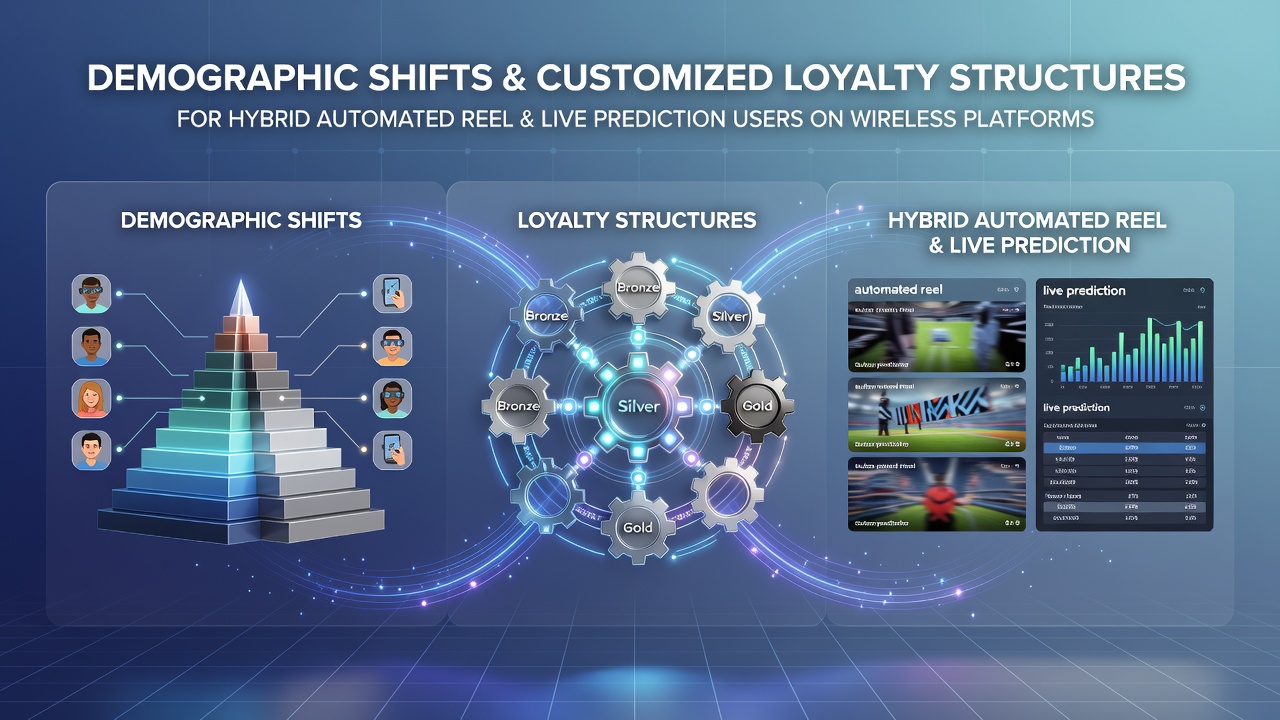
Demographic Shifts Driving Customized Loyalty Structures for Hybrid Automated Reel and Live Prediction Users on Wireless Platforms
Population changes across multiple regions have prompted gaming operators to redesign loyalty frameworks that blend automated reel mechanics with live prediction features on mobile networks, and data released in August 2026 from several state regulators highlights accelerated adoption among users aged 25 to 44 who split their activity between both formats.
Population Patterns Reshaping Platform Usage
Recent figures from the American Gaming Association indicate that mobile sessions combining reel automation and outcome forecasting grew by 18 percent year over year through mid-2026, while researchers at the University of Nevada Reno documented a corresponding rise in account registrations among urban millennials and early Gen Z cohorts who maintain active profiles on wireless devices. These groups tend to alternate between quick reel spins and extended live event tracking within single sessions, which has forced loyalty architects to move away from uniform point systems toward segmented reward tiers that track cross-format engagement metrics.
Observers note that household income brackets between $50,000 and $90,000 annually now represent the largest segment of hybrid users, and platform analytics reveal higher retention rates when loyalty offers include tiered multipliers applied simultaneously to reel play volume and prediction accuracy streaks. Regulatory filings submitted to the Nevada Gaming Control Board in the first half of 2026 show that operators adjusted bonus structures after internal dashboards flagged a 27 percent increase in session overlap between the two activity types on 5G networks.
Customized Reward Mechanisms Emerging from Usage Data
Loyalty programs have begun incorporating real-time behavioral signals such as reel spin frequency alongside prediction stake sizing to generate individualized offers, and one study released by the Canadian Centre for Gaming Research found that participants who received hybrid-specific cashback tiers increased their weekly spend by measurable margins compared with those on legacy flat-rate plans. Operators achieve this customization through backend algorithms that assign dynamic point values based on demographic metadata collected at registration, including location density and device type, then adjust redemption windows accordingly.

Additional analysis from the Australian Institute of Family Studies tracked similar patterns in regional markets where wireless penetration exceeds 85 percent, revealing that female users within the 30 to 39 age range demonstrate stronger responses to loyalty bundles that combine reel jackpot qualifiers with live sports outcome bonuses. These bundles typically unlock after a set number of combined actions rather than isolated activity thresholds, which aligns with observed shifts in attention patterns across short and sustained engagement modes.
Regional Variations and Platform Adaptations
State-level data compilations show that markets with dense 5G coverage experienced the fastest rollout of these tailored structures, whereas operators in slower-adopting areas continue testing pilot versions limited to select user cohorts. Program designers rely on anonymized session logs to calibrate reward granularity, ensuring that automated reel users who occasionally enter live prediction pools receive prompt offers calibrated to their established play cadence.
Industry reports further indicate that cross-format loyalty incentives have reduced account dormancy rates by double-digit percentages in tracked jurisdictions, and platform teams continue refining segmentation models to accommodate emerging demographic clusters such as remote workers who log sessions during variable daytime windows. The adjustments reflect ongoing responses to population mobility and device upgrade cycles rather than any single policy directive.
Conclusion
Demographic movements documented through 2026 continue to steer loyalty architecture toward granular, format-blended incentives delivered over wireless channels, and operators maintain these systems by monitoring aggregate usage statistics supplied through regulatory channels and academic partnerships. Continued observation of age, income, and regional variables will determine how quickly additional refinements appear in production environments.